Digging the digital – Using digital data donations to enrich population research
Dr. Markus Wolf (Department of Psychology),
Dr. Oliver Grübner (Department of Geography),
Dr. Eileen Neumann (Department of Adult Psychiatry and Psychotherapy),
Nico Pfiffner (Department of Communication andMedia Research; Digital Donation Lab)
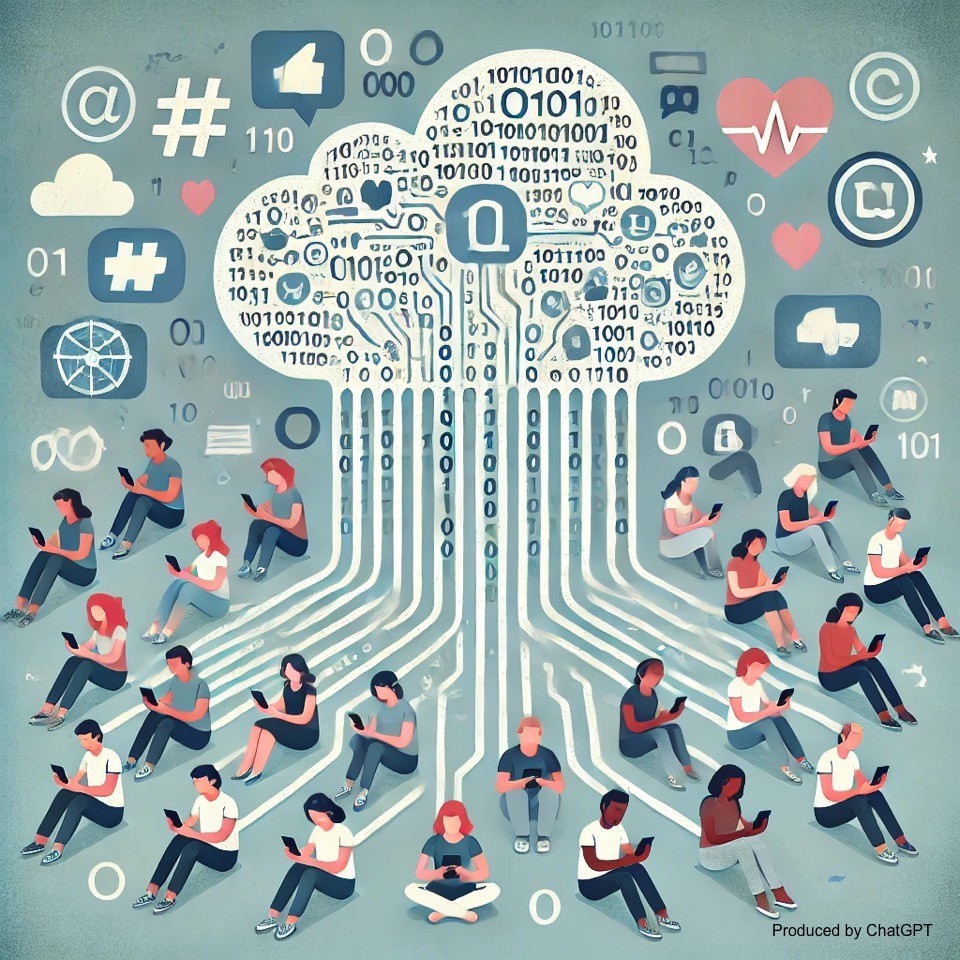
Traumatic exposure during political or economic upheavals, health pandemics, natural disasters, or war, are serious threats to a person’s mental health and can have long-lasting negative effects on a population level. Social media and other digital sources used by affected individuals are opening a window into individual’s real live and provide new prospects on risk and protective factors including psychological resources, resilience and coping strategies in times of crisis and beyond. Because these factors are idiosyncratic and dynamic in nature, they are not well-addressed by population science’s classical tool-box. Digging into to this digital sphere – for instance by analyzing activities in popular social media (e.g. Telegram) by Ukrainian residents during the war – offers unprecedented opportunities for population health research.
Accessing this data source, however, is still a major challenge. This is where our project starts. Citizen science initiatives have proposed data donations as a way of accessing such data sources. Recently, the UZH Data Donation Lab (DDL) has developed the Data Donation Module (DDM), a web-module that allows the secure retrieval and processing of individual digital data donations. The DDM processes data such as user-generated web content, social media activity or content, or (passive) smartphone data, all of which have the potential to provide new and unobtrusive insights into a person’s (mental) health.
In our project we aim to develop an interface and data pipeline for digital donations to be attached to large scale population surveys – such as the PRC’s Mental Health Surveillance in Ukraine project (MAP) – to complement structured survey data with unstructured digital data. More specifically, our project has the following goals:
- Develop a prototype digital data donation pipeline to collect social media and digital behavioral data by the means of individual data donations alongside classical surveys (e.g., Red Cap).
- Assess participants’ attitudes towards digital data donations for the purpose of detection of real-life mental health distress and resilience.
- Empirically validate a Ukrainian version of the Linguistic Inquiry and Word Count (LIWC) dictionary to extract standard language features, e.g. emotional tone, from text-based data donations; LIWC is one of the best validated and most widely used dictionary-based text analysis programs worldwide and available in multiple languages, which allows its use across various countries and languages.
Digital epidemiological data has the potential to enrich survey-based structured health data allowing in-situ insights into individuals’ everyday lives, behaviors and health conditions based on their digital activities, contents and traces. Combining structured survey data with unstructured naturalistic data retrieved from the persons’ digital devices offers exciting new prospects for data enrichment in population research. The module developed in this project will be a starting point to use individual data donations in PRC projects and future multilingual population studies.